

Home / Diagnostics / Liquid biopsy
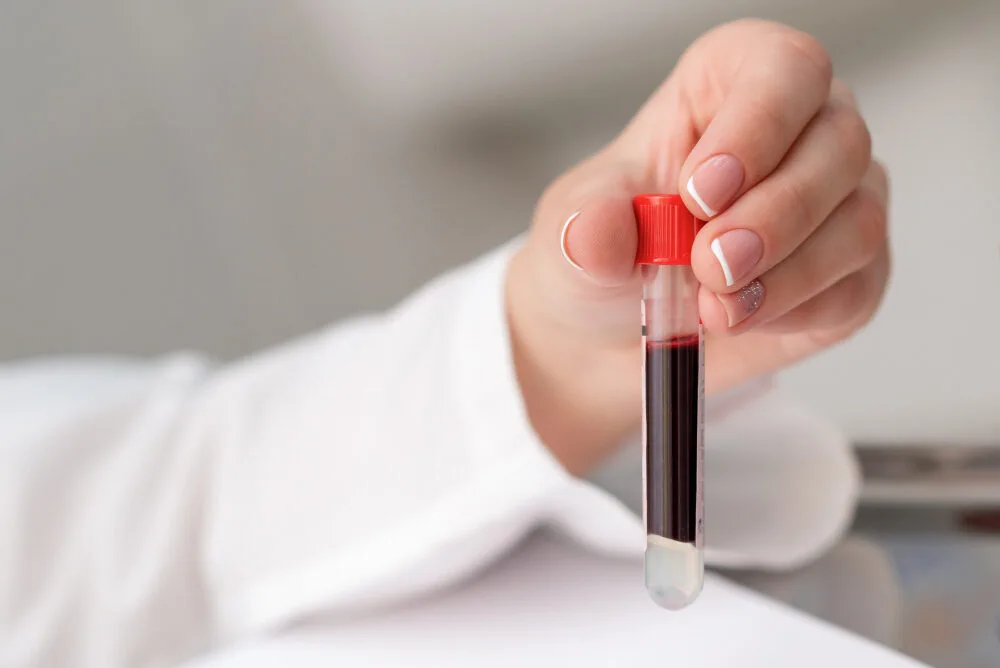
Liquid biopsy is a laboratory-based diagnostic method used in oncology that allows additional information about cancer to be obtained from a blood sample. The test focuses on the analysis of circulating tumor cells (CTCs), which are cancer cells that, during the course of the disease, may enter the bloodstream.
The course of cancer can vary between individual patients, partly due to differences in the biological and phenotypic characteristics of tumor cells. Analysis of CTCs allows assessment of both their number and selected cellular features, providing information about the presence of disease and changes occurring over time. These findings may help complement the patient’s clinical picture and can be used by the doctor as part of a comprehensive medical assessment, together with other diagnostic results.
Liquid biopsy is a laboratory-based diagnostic method used in oncology that allows additional information about cancer to be obtained from a blood sample.
The test focuses on the analysis of circulating tumor cells (CTCs), which are cancer cells that, during the course of the disease, may enter the bloodstream.
The course of cancer can vary between individual patients, partly due to differences in the biological and phenotypic characteristics of tumor cells. Analysis of CTCs allows assessment of both their number and selected cellular features, providing information about the presence of disease and changes occurring over time.
These findings may help complement the patient’s clinical picture and can be used by the doctor as part of a comprehensive medical assessment, together with other diagnostic results.
Liquid biopsy may be considered as a supportive diagnostic tool in patients:
The decision to perform the test is made by a doctor, based on the patient’s medical history, clinical situation, and current diagnostic standards.
Multilingual care
Our staff speaks English, Polish and German.
The test results are reviewed by a doctor, taking into account your overall health, medical history, and any other relevant clinical information.
During a medical consultation, the results are explained and discussed to ensure they are properly understood and interpreted within the appropriate clinical context.
Liquid biopsy does not replace traditional tissue biopsy. A conventional biopsy allows direct analysis of tissue material and, in many cases, is essential for establishing a diagnosis.
Liquid biopsy is a complementary test performed using a blood sample. It may be considered in situations where the doctor deems it appropriate to obtain additional laboratory information or when performing a tissue biopsy is limited. Test results should always be interpreted in the context of the overall clinical picture and other diagnostic methods.
The analysis provides three key types of information:
Liquid biopsy is not intended to definitively determine a specific cancer type or to establish a histopathological diagnosis. The test involves the laboratory analysis of selected cellular markers present on circulating tumor cells detected in the patient’s blood.
Based on this analysis, information is obtained about the characteristics or origin of the cells, for example the presence of features typical of epithelial cancers, hematologic malignancies, or other groups of tumors.
In most cases, there is no need to remain at the clinic after the procedure. A liquid biopsy involves drawing a blood sample and is minimally invasive in nature. After the test, patients can usually return to their normal daily activities.
In individual cases, medical staff may provide additional recommendations depending on the patient’s condition.
Not necessarily. If you have a trusted physician or qualified nurse who can collect the blood sample for you locally, we may be able to provide a dedicated blood collection kit along with detailed instructions for proper handling and shipment.
Whether this option is available depends on your country of residence and local regulations. Please contact us to discuss the possibilities in your specific location.
Liquid biopsy may be considered at various stages of cancer — including at the time of diagnosis, during treatment, in remission, or as part of follow-up care — when the treating doctor determines that additional laboratory information may be beneficial.
Its use is always guided by the individual clinical context and the specific needs of the patient.
The laboratory report is typically available within approximately 7–10 working days after the sample reaches the laboratory.
Of course! We will be happy to assist with arranging both accommodation and transportation. We work with trusted hotels located near our clinic and can also organize airport transfers from Munich. Please contact our team — we will be glad to present the available options and help you choose the solution best suited to your needs.
We speak English, Polish and German.