

Home / Prevention / Ozone therapy
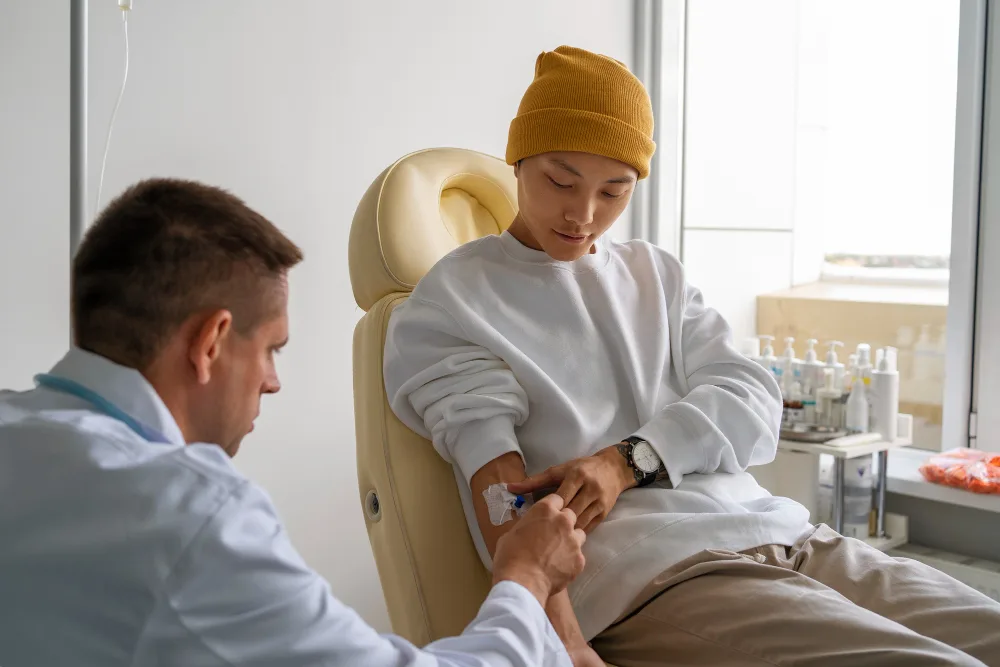
Ozone is a highly reactive form of oxygen (O₃) with distinct biological properties. In medical practice, it is used in carefully controlled concentrations as part of complementary therapeutic approaches.
In our clinic, ozone therapy is administered using a method known as major autohemotherapy (MAH). During this procedure, a defined volume of the patient’s blood is withdrawn into a closed, sterile system, gently exposed to a precisely calibrated ozone–oxygen mixture, and then reinfused within the same session.
Research suggests that ozone therapy may support biological processes such as microcirculation, cellular oxygen utilization, oxidative balance, and selected immune and inflammatory responses. Its use is determined based on the individual clinical context and defined treatment goals.
Ozone is a highly reactive form of oxygen (O₃) with distinct biological properties. In medical practice, it is used in carefully controlled concentrations as part of complementary therapeutic approaches.
In our clinic, ozone therapy is administered using a method known as major autohemotherapy (MAH). During this procedure, a defined volume of the patient’s blood is withdrawn into a closed, sterile system, gently exposed to a precisely calibrated ozone–oxygen mixture, and then reinfused within the same session.
Research suggests that ozone therapy may support biological processes such as microcirculation, cellular oxygen utilization, oxidative balance, and selected immune and inflammatory responses. Its use is determined based on the individual clinical context and defined treatment goals.
In clinical practice and research settings, ozone therapy has been considered in contexts including:
Whether ozone therapy is appropriate depends on the individual clinical situation and overall treatment strategy.
Multilingual care
Our staff speaks English, Polish and German.
The decision to use ozone therapy is made by the treating doctor following a comprehensive medical assessment. This includes evaluation of the patient’s medical history, current diagnoses, ongoing treatments, and overall clinical condition.
If ozone therapy is considered appropriate and no contraindications are present, an individualized treatment protocol is developed. The procedure is performed under medical supervision and integrated into the patient’s overall therapeutic plan.
Major autohemotherapy (MAH) is used — a commonly applied medical form of ozone therapy. During the procedure, a small amount of blood is withdrawn, gently mixed with a precisely prepared ozone–oxygen mixture, and reinfused during the same session under medical supervision.
The number of sessions varies depending on individual circumstances. After reviewing your medical history, clinical findings, and relevant test results, your doctor will recommend a personalised treatment plan and discuss it with you in detail.
Ozone therapy is considered a minimally invasive procedure and generally does not require a recovery period. Most patients are able to resume their usual daily activities shortly after treatment, unless advised otherwise by the doctor.
When administered by qualified medical professionals and conducted under appropriate supervision, ozone therapy is generally well tolerated. Treatment is initiated only after a thorough medical assessment has been completed and potential contraindications have been excluded. Possible risks and expected benefits are discussed in advance. Throughout the course of therapy, patients are appropriately monitored, and the protocol is tailored to individual clinical needs.
Of course! We will be happy to assist with arranging both accommodation and transportation. We work with trusted hotels located near our clinic and can also organize airport transfers from Munich. Please contact our team — we will be glad to present the available options and help you choose the solution best suited to your needs.
We speak English, Polish and German.