

Supportive therapy
A supportive therapy used to gently raise the body’s internal temperature.
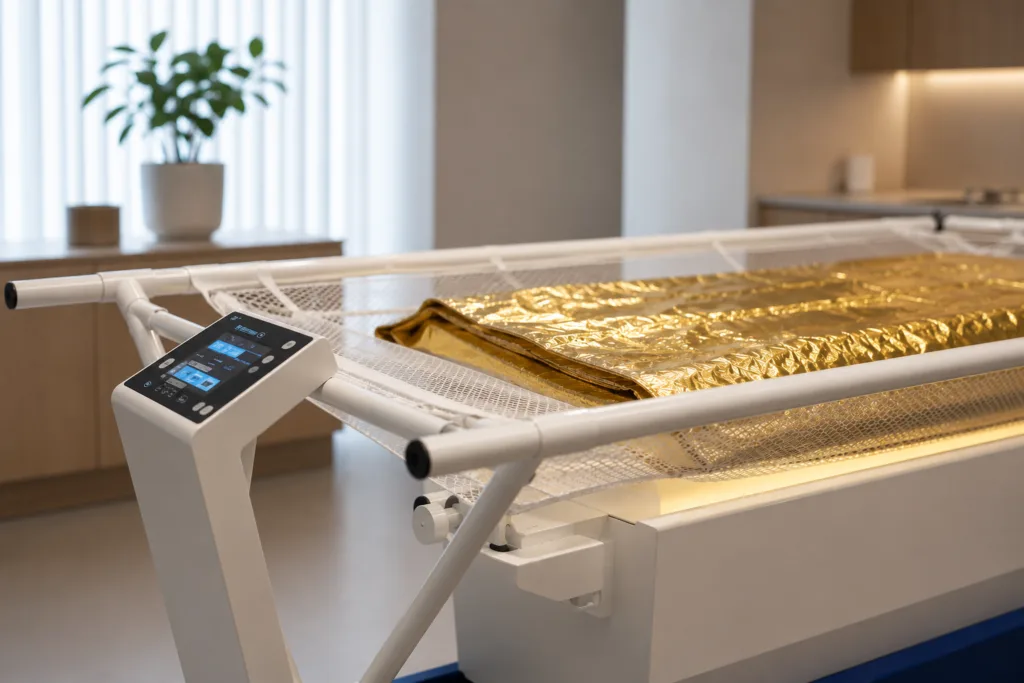
The therapy
The aim of whole-body hyperthermia is to raise the body’s internal temperature in a controlled, medically supervised way. That rise in temperature is useful for several reasons.
First, it increases circulation. Warmth widens the blood vessels and gets the blood flowing more freely, so oxygen, nutrients, and any medication carried in the bloodstream can travel further and reach tissue that is normally harder to supply.
Second, it heightens the body’s immune response. A raised temperature prompts the immune system to work harder, helping its cells become more active and respond more quickly — much as the body’s defences do during a natural fever.
Third, it can improve the effect of other treatments. In a warmed, well-supplied body, certain treatments given at the same time may work more effectively than they would at normal temperature.
This third effect is the reason whole-body hyperthermia is rarely used on its own. It is usually used as a supportive therapy — used alongside other treatments, so they can benefit from the conditions the warmth creates. What it is used for, and how, is always decided together with your doctor.
The body is gently warmed for around 90-120 minutes until the desired internal temperature is reached.
The raised temperature is held for a defined period, tailored to the treatment goal.
After the procedure, the patient rests, allowing the body time to recover gently and for the body temperature to gradually return to normal.
In clinical practice and research settings, it has been considered in contexts including:
QUALIFICATION
The decision to use whole-body hyperthermia is made by the treating doctor following a comprehensive medical assessment — a review of your medical history, current diagnoses, ongoing treatments, and overall clinical condition. Because the therapy places demands on the circulatory system, some conditions may make it unsuitable, which is one reason this assessment is carried out beforehand.
If it is considered appropriate and no contraindications are present, an individualised treatment protocol is developed, performed under medical supervision and integrated into your overall therapeutic plan.
frequently asked questions
Despite their apparent similarity, these are two distinct methods. A sauna heats the air around the body and warms the skin, whereas whole-body hyperthermia goes deeper—it raises the body’s core temperature in a controlled manner, under constant medical supervision and for a specific therapeutic purpose.
Many people compare this sensation to a rising fever. Vital signs are monitored continuously, and the procedure is adjusted to ensure it remains well tolerated.
The number of treatments is determined on a individual basis. After reviewing the patient’s medical history, clinical findings and test results, the doctor will propose a treatment plan tailored to the specific patient and discuss it in detail.
Many patients feel a need to rest after a session. Your doctor will let you know what to expect and when it is reasonable to resume your usual activities.
When carried out by qualified medical professionals and under appropriate supervision, mild-to-moderate whole-body hyperthermia is generally well tolerated. Treatment begins only after a thorough medical assessment has been completed and potential contraindications have been excluded.
We speak English, Polish and German.