

Home / Diagnostics / ECG
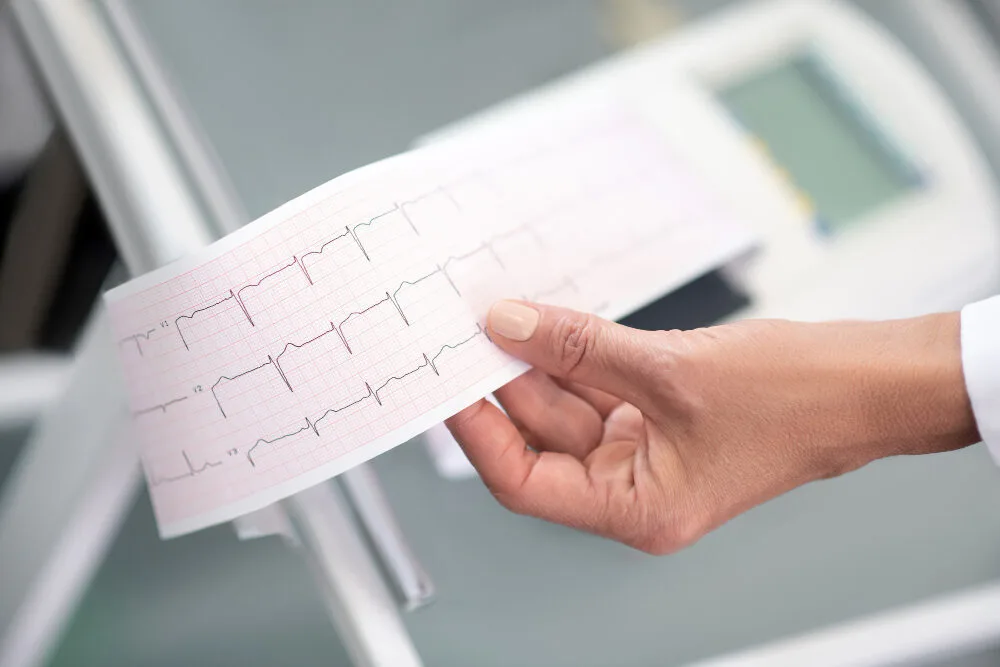
An electrocardiogram (ECG) is a non-invasive diagnostic test used to record the electrical activity of the heart. It helps assess heart rhythm, heart rate, and how electrical signals travel through the heart muscle, providing important information about overall cardiac function.
The examination is carried out by placing small adhesive electrodes on the skin, usually on the chest and limbs. These electrodes detect the electrical signals produced by the heart with each heartbeat. The signals are recorded and displayed as a waveform tracing, which is analysed during or after the examination. An ECG may help identify abnormalities such as irregular heart rhythms, conduction disturbances, or signs that the heart is under strain.
An ECG may be used as part of the diagnostic evaluation of various cardiovascular conditions. The test is quick, painless, and performed while the patient is at rest.
An ECG may be considered when:
The decision to perform an ECG is made by the doctor based on the patient’s symptoms, medical history, and overall clinical assessment.
Multilingual care
Our staff speaks English, Polish and German.
The test results are reviewed by a doctor, taking into account your overall health, medical history, and any other relevant clinical information.
During a medical consultation, the results are then explained and discussed, allowing them to be understood in the appropriate context. This helps you gain a clearer understanding of your results and your current health status.
An ECG examination usually does not require any special preparation. It is advisable to wear comfortable clothing that allows easy access to the chest, wrists, and ankles. On the day of the examination, patients should avoid applying oily creams or lotions to the skin in areas where the electrodes will be placed, as these may interfere with proper signal conduction.
Before the test, it is also recommended to avoid intense physical activity and excessive caffeine intake, as both can influence heart rate. Patients who are taking medications, particularly cardiac medications, should inform their physician prior to the examination.
If any specific preparation is required, the patient will be informed in advance.
A standard resting ECG usually takes only a few minutes to perform. Including preparation time and electrode placement, the entire appointment typically lasts about 15 – 20 minutes.
Of course! We will be happy to assist with arranging both accommodation and transportation. We work with trusted hotels located near our clinic and can also organize airport transfers from Munich. Please contact our team — we will be glad to present the available options and help you choose the solution best suited to your needs.
We speak English, Polish and German.