

Home / Diagnostics / Holter monitor
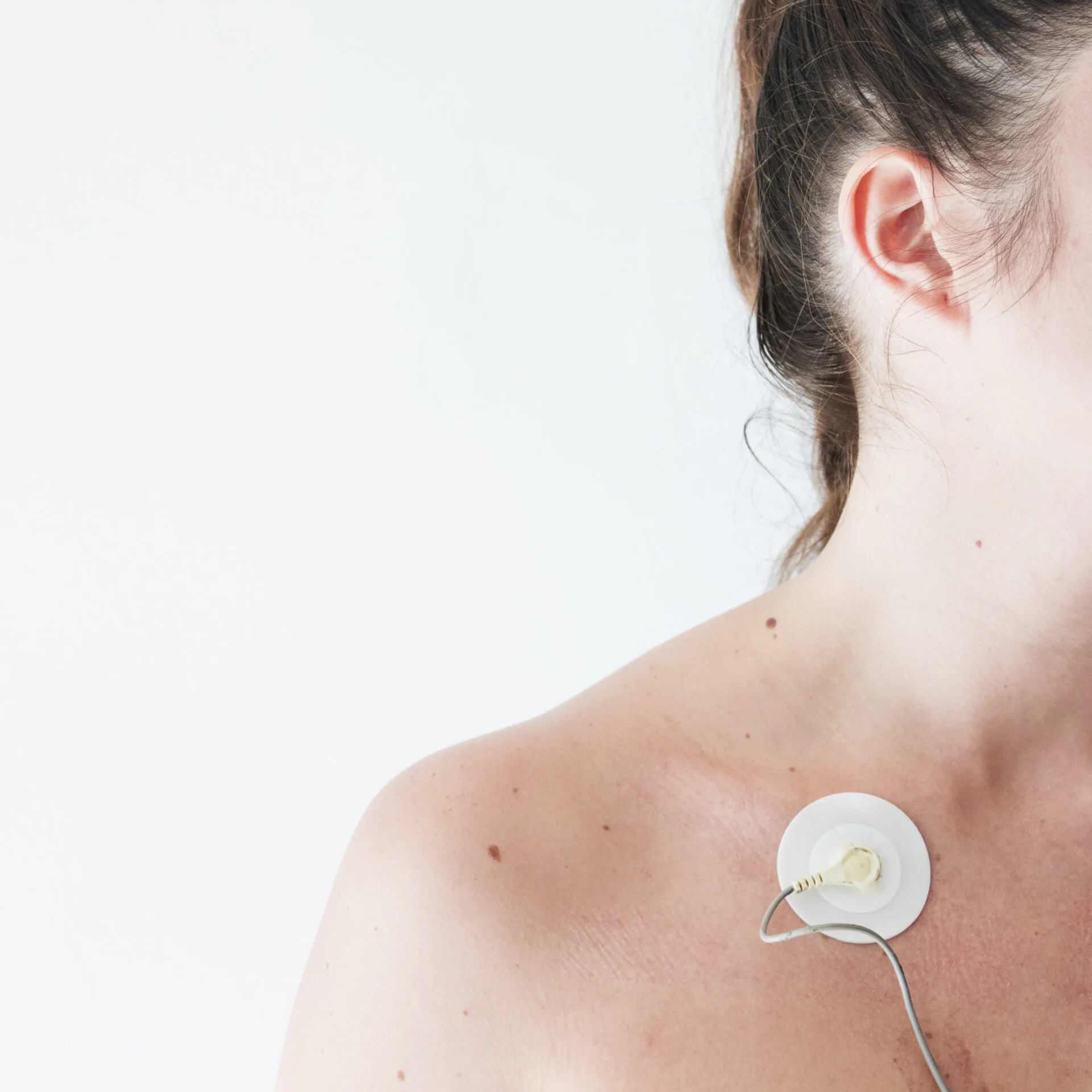
Holter monitoring is a non-invasive diagnostic test used to continuously record the electrical activity of the heart over an extended period – typically 24 hours or longer. It is designed to assess heart rhythm and heart rate throughout normal daily activities and during sleep, providing insight into heart function over time.
The test is performed by placing small adhesive electrodes on the skin and connecting them to a portable recording device worn by the patient. The device continuously records the heart’s electrical activity during the monitoring period. Once the recording is completed, the data are reviewed and interpreted by a doctor.
Holter monitoring may help detect intermittent heart rhythm abnormalities that occur sporadically or under specific conditions and might not be identified during a standard ECG. It is therefore commonly used to support the diagnostic evaluation of patients with suspected rhythm disturbances, based on their symptoms, medical history, and clinical findings.
Holter monitoring may be considered when:
The decision to perform Holter monitoring, as well as the duration of the recording, is determined by the physician based on the patient’s symptoms, medical history, and clinical assessment.
Multilingual care
Our staff speaks English, Polish and German.
The test results are reviewed by a doctor, taking into account your overall health, medical history, and any other relevant clinical information.
During a medical consultation, the results are explained and discussed to ensure they are properly understood and interpreted within the appropriate clinical context.
A Holter examination is a continuous recording of the heart’s electrical activity, usually over 24 to 72 hours. It helps detect heart rhythm disturbances that may not be captured during a standard resting ECG.
Holter monitoring may help identify:
intermittent arrhythmias (irregular heart rhythms),
episodes of unusually fast (tachycardia) or slow (bradycardia) heart rate,
short rhythm disturbances associated with symptoms such as palpitations, dizziness, or fainting,
conduction abnormalities or pauses in heart rhythm
Because the recording takes place during normal daily activities, the test can help correlate symptoms with changes in heart rhythm.
In most cases, you can continue your normal daily activities while wearing a Holter monitor. In fact, maintaining your usual routine helps ensure that the recording reflects your typical heart rhythm.
However, you should avoid:
showering, bathing, or swimming (the device must not get wet),
intense physical activity that may cause the electrodes to loosen.
You will receive specific instructions on how to care for the device and what to do if an electrode becomes loose. If you experience any symptoms during the monitoring period, you may be asked to record them in a diary to help correlate them with the ECG findings.
Once the device has been returned, the recorded data are reviewed and analyzed by the doctor. A detailed explanation of the findings is provided in English, usually shortly after the analysis has been completed.
Of course! We will be happy to assist with arranging both accommodation and transportation. We work with trusted hotels located near our clinic and can also organize airport transfers from Munich. Please contact our team — we will be glad to present the available options and help you choose the solution best suited to your needs.
We speak English, Polish and German.